
'This was earlier driven by industries and the commercial sector.'

Around 80 mn rural households are estimated to have no access to grid power.

Asia's richest man Gautam Adani on Wednesday said his ports-to-power conglomerate will build three giga factories for manufacturing solar modules, wind turbines, and hydrogen electrolyzers as part of a $70 billion investment in clean energy by 2030. Adani group is stepping up investments across the green energy value chain as it aims to become the world's top renewable energy producer by 2030. "The Adani Group has already committed $70 billion (for climate change and green energy).

Eyeing to become India's largest player in 2020 Adani Group plans to invest 70 per cent of its capital expenditure in clean energy and energy efficient systems.

To ramp up domestic battery manufacturing capacity and reduce the dependence on imports, the government has initiated talks with a few lithium-rich countries to supply the mineral to Indian companies, industry sources informed Business Standard. The Ministry of External Affairs (MEA) held a meeting with the ambassadors of countries, including Argentina, Chile, and Bolivia, among others, to put forth its request.

'I think some of us, like Mukesh Ambani, myself and those of us who head industrial units, ought to really focus on what we can really do to make the world a safer place, maybe 50 or 100 years from now.' 'For instance, how can we deal with climate change and global warming, right now?' 'The effects of it may not be felt now; in fact, we may pay a price for it today, but it will help the generations to follow.'

Billionaire Mukesh Ambani's Reliance Industries Ltd on Friday announced the buyout of British battery maker Faradion Ltd for an enterprise value of 100 million, as the oil-to-retail conglomerate continued with the acquisition of end-to-end technology for its multi-billion-dollar clean energy portfolio. Reliance New Energy Solar Ltd (RNESL), a unit of the nation's most valuable company, signed definitive agreements to acquire 100 per cent shareholding in Faradion for an enterprise value of 100 million and will invest an additional 25 million as growth capital to accelerate the commercial roll-out, the company said in a statement. Based out of Sheffield and Oxford in the UK and with its patented sodium-ion battery technology, Faradion is one of the leading global battery technology companies.

After witnessing cloudy skies this year, the country's renewable energy sector is expected to boom with a likely investment of over $15 billion in 2022 as the government focuses on electric vehicles, green hydrogen, manufacturing of solar equipment as well as achieving the ambitious 175 GW renewable capacity target. India, which has an installed renewable energy generation capacity of a little over 150 GW, aims to reach 175 GW in 2022. Out of the total mix, 100 GW would be from solar, 60 GW from wind, 10 GW from bio-power and 5 GW from small hydro power projects.

Billionaire Mukesh Ambani-led Reliance Industries Ltd's plans for investing Rs 75,000 crore in solar, batteries, fuel cells and hydrogen could create valuation of $36 billion (Rs 2.6 lakh crore) for the new energy business, Wall Street brokerage Bernstein Research said in a report. Reliance currently has three verticals -- oil-to-chemical (O2C) business that houses its oil refineries, petrochemical plants and fuel retailing business; digital services that comprises telecom arm Jio; and retail including e-commerce. New Energy will be the fourth vertical. At the company's annual general meeting of shareholders last month, Ambani announced a plan to invest Rs 75,000 crore in a new energy business over the next 3 years in the next stage in its transformation.

Reliance's big-bang entry across the solar ecosystem will cut dependence on Chinese imports drastically. And Ambani's repeated emphasis that RIL's new energy foray will be 'a truly global business' points that his group is playing not just for a share of the Indian pie but to be the OEM in the larger 5,000 GW global market by 2030, points out Shailesh Dobhal.

Ashish Narsale/Rediff.com brings you amazing gadgets and mobile devices from CES 2022.

Tamil Nadu secured investments worth Rs 1.44 trillion on Monday by signing of memoranda of understanding (MoU) with 60 companies, laying of foundation stones and inauguration of new projects.

Richest Indian Gautam Adani's ports-to-power-to-cement conglomerate is "deeply overleveraged" with the group predominantly using debt to invest aggressively across existing as well as new businesses, CreditSights, a Fitch Group unit, said on Tuesday. In a report titled 'Adani Group: Deeply Overleveraged', CreditSights said, "In the worst-case scenario, overly ambitious debt-funded growth plans could eventually spiral into a massive debt trap, and possibly culminate into a distressed situation or default of one or more group companies." Starting out as a commodities trader in the late 1980s, the Adani group has diversified from mines, ports and power plants into airports, data centers and defence.

TotalEnergies will acquire 25 per cent shareholding in Adani New Industries Ltd -- the firm that houses Adani Group's new energy business -- for an undisclosed amount, the two firms said in separate statements. "TotalEnergies has entered into an agreement with (Adani Group's flagship) Adani Enterprises Limited (AEL) to acquire a 25 per cent interest in ANIL," the French energy giant said.

Reliance Industries Ltd, whose offering of rock-bottom tariffs shook up the telecom industry, is looking to repeat the feat in the green energy business, where its billionaire chairman Mukesh Ambani sees promise to outshine all existing growth engines in 5-7 years. Having pledged Rs 6 lakh crore on green energy, Ambani says RIL will scale up investments in this business which will start going live in the next 12 months. "Over the next 12 months our investments across the Green Energy value chain will gradually start going live, scaling up over the next couple of years," Ambani, chairman and managing director of RIL, said in the company's latest annual report.

Discussions are also going on to bring PLI scheme for toys, furniture, bicycles and containers. The objective of the scheme is to make domestic manufacturing globally competitive, create global champions in manufacturing, boost exports and create jobs.

RIL subsidiary Reliance New Energy Solar, Ola Electric, Hyundai Global Motors Company and Rajesh Exports have been approved for receiving incentives under the Rs 18,100 crore Production Linked Incentive (PLI) scheme for battery manufacturing in India, sources said on Thursday. "The ministry had received bids from 10 companies with a capacity of 130 GWh. Reliance, Ola Electric, Hyundai and Rajesh Exports have qualified for ACC batteries," a source said. Other companies which had applied for the PLI scheme for Advanced Chemistry Cell (ACC) batteries were Lucas-TVS, Mahindra & Mahindra, Amara Raja Batteries, Exide Industries, Larsen & Toubro and India Power Corporation Limited.

The government is likely to extend fiscal incentives for production of toys, bicycles and leather and footwear in the forthcoming budget as it looks to expand production linked incentive (PLI) scheme to cover more high-employment potential sectors, sources said. The government has already rolled out the scheme with an outlay of about Rs 2 lakh crore for as many as 14 sectors, including automobiles and auto components, white goods, pharma, textiles, food products, high efficiency solar PV modules, advance chemistry cell and speciality steel. The scheme aims to make domestic manufacturing globally competitive and create global champions in manufacturing, and it is yielding solid results, sources said.
India's production-linked incentive (PLI) scheme, which aims to make domestic manufacturing globally competitive, has attracted investment worth over Rs 45,000 crore and has also created three lakh jobs, NITI Aayog CEO Parameswaran Iyer said on Monday. The government has rolled out the scheme with an outlay of about Rs 2 lakh crore for as many as 14 sectors, including automobiles and auto components, white goods, pharma, textiles, food products, high efficiency solar PV modules, advanced chemistry cell and speciality steel. "The PLI programme has already started showing results.

Mukesh Ambani, who took over the reins of Reliance Industries Ltd (RIL) after the sudden demise of his legendary industrialist father Dhirubhai Ambani, completes 20 years at the helm during which the company saw a 17-fold jump in revenues, 20-times surge in profit and has become a global conglomerate.


A vast majority of the business leaders believe that the Production Linked Incentive (PLI) schemes have been beneficial and expect an extension to other sectors in the coming years, a Deloitte Survey said on Friday. An overwhelming number of survey respondents hope the budget will fuel growth across industries by building strong domestic demand and focussing on capital expenditure and believe that it would define the 'Amrit Kaal'. "Critical to this growth will be the pace of capital expenditure, infrastructure development, and the need to boost infrastructure financing through private partnership. 60 per cent of respondents suggested raising funds through Indian Government Bonds," the survey said.
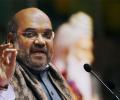
Take part in the growth story, Amit A Shah tells Corporate India.
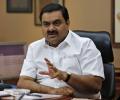
Unlike RIL, the Adani group has not yet brought in any big stakeholders to refinance debt or expand.

Given the hydrogen connection, it's ironic that Hindenburg Research released a long report, accusing the Adani group of financial manipulation, observes Devangshu Datta.
Four companies - Rajesh Exports, Hyundai Global Motors Company, Ola Electric Mobility and Reliance New Energy - are eligible for receiving benefits under the production-linked incentive (PLI) scheme for advanced chemistry cell battery storage, the heavy industries ministry said on Thursday. The allotment was made for a total of 50 GWh of battery capacity to the four successful bidders. These firms, the ministry said, will receive incentives under India's Rs 18,100 crore programme to boost local battery cell production.

Smokers and tobacco consumers will have to shell out more for their indulgence as Finance Minister Arun Jaitley continued with the crackdown on cigarettes and tobacco products by increasing taxes in the Budget for 2017-18.

The solar-powered spacecraft which left Earth five years ago finally reached its destination and entered into Jupiter's orbit.

The Nobel Prize in Physics was on Tuesday awarded with one half to James Peebles for his theoretical discoveries in physical cosmology and the other half jointly to Michel Mayor and Didier Queloz for discovering an exoplanet orbiting a solar-type star.

Raking up the border issue, Congress leader Rahul Gandhi on Friday said every individual in Ladakh knows that China has "taken away our land" and claimed that Prime Minister Narendra Modi's assertion that not an inch of land was taken away was "absolutely false".

Reliance Industries will by 2030 create or enable capacity to generate at least 100 gigawatts of electricity from renewable sources, which can be converted into carbon-free green hydrogen, its chairman Mukesh Ambani said Friday as he outlined a 1-1-1 vision to bring down the cost of hydrogen to under $1 per 1 kg in 1 decade. The focus on generating electricity from renewable sources of energy such as solar and wind -will help cut carbon emissions in the world's third-largest greenhouse gas emitter. The same electricity, when converted into green hydrogen, can replace petrol and diesel in automobiles and other fuels in the industry, helping cut down on the use of fossil fuels, carbon emissions and reduce import dependence.
India's jugalbandhi with coal and clean energy is coming unstuck, neither achieving adequate renewable generation nor ensuring sufficient coal-fired power in the quest to become a $5-trillion economy. Six months have elapsed since Prime Minister Narendra Modi announced an ambitious climate agenda for India at COP26 at Glasgow. The net zero emissions target by 2070 is a distant one, but there are nearer-term plans to meet 50 per cent of energy demand with renewables by 2030 by increasing capacity to 450 Gw. A cursory look at the balance sheet of India's climate progress since November reveals ponderous progress towards meeting the renewables target even as the country is scrambling to expand coal-fired generation in the face of a power crisis.

The issues around trade gaps, especially around steel and aluminium tariffs imposed by the US, will be addressed separately.

Started in August 2013 as a technology development project at NASA's Jet Propulsion Laboratory, the Mars Helicopter had to prove that big things could come in small packages.
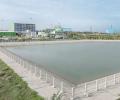
The group will be in a better position to now scale up most of its segments irrespective of government policy, but the bad news others add is its growing debt.

Financials were the top gainers lead by private lenders ICICI Bank and HDFC Bank

The US space agency NASA is planning an ambitious mission involving international scientists to explore the possibility of life on Europa, the moon of planet Jupiter.

The US side had pushed for removal of price caps on medical equipment such as coronary stents and a commitment by India to reduce trade imbalance

Bhavish Aggarwal, the founder of ride-hailing firm Ola who disrupted the electric scooters market in the country, is planning to launch an electric sports car in 2024. The plan will put it in competition with Indian players, such as the Tata group and Mahindra & Mahindra, and global giants like Tesla and Hyundai. Aggarwal, recently, took a group of reporters to the firm's design studio at the Ola campus in Bengaluru where his teams are working on several EVs, including scooters, motorcycles, sedans, and SUVs - and even robotaxis.
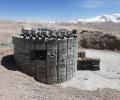
In a major technology push, Indian Army has envisioned construction of "permanent defences" along the Line of Actual Control in eastern Ladakh using cutting-edge 3D printing technology, a move that will save time and improve its defence preparedness, sources said on Tuesday.
